
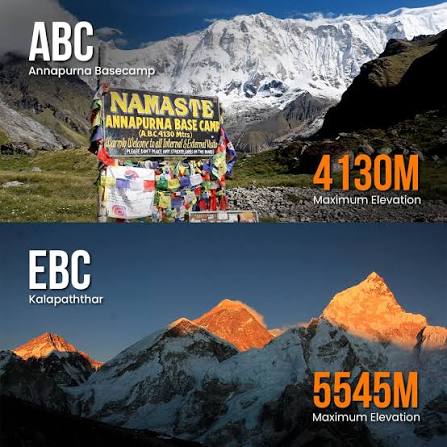
If you’ve got two browser tabs open right now — one with an Everest Base Camp itinerary, one with Annapurna Base Camp — you’re not alone. Choosing between Everest Base Camp vs Annapurna Base Camp is one of the most common dilemmas for anyone planning a first Himalayan trek, and picking between them feels like it should be harder than it is.
Here’s the short version: they’re not really competing for the same trip. Everest Base Camp is longer, higher, colder, and comes with a bit more prestige attached to the name. Annapurna Base Camp is shorter, gentler, cheaper, and arguably more scenic day to day, even if it doesn’t carry the same “I stood at the foot of the world’s tallest mountain” line. Which one is right for you depends less on which is “better” and more on what you actually want out of the two or three weeks you’re putting toward it.
Quick Comparison Table
| Factor | Everest Base Camp (EBC) | Annapurna Base Camp (ABC) |
| Duration | 12–14 days | 7–11 days |
| Max altitude | 5,364 m (5,545 m at Kala Patthar) | 4,130 m |
| Difficulty | Challenging | Moderate |
| Access | Flight to Lukla required | Drive from Pokhara |
| Estimated cost | $1,200–$2,000+ | $800–$1,200 |
| Rest/acclimatization days | 2 built into itinerary | Not strictly required |
| Best season | March–May, Sept–Nov | March–May, Sept–Nov |
| Crowds | Very busy in peak season | Busy, but noticeably less so |
Duration and Itinerary
EBC takes 12 to 14 days for most itineraries, including two dedicated acclimatization days — usually at Namche Bazaar and Dingboche. ABC can be done in 7 to 11 days, and because it tops out at a lower altitude, most itineraries don’t build in mandatory rest days the way EBC does.
If you’re working with limited holiday time, this alone might decide it for you. A two-week EBC trip (plus travel days either side) is a serious chunk of vacation. ABC fits more comfortably into a 10-day window including Kathmandu or Pokhara time.
Altitude and Difficulty
This is where the two treks diverge the most. EBC’s highest point — Kala Patthar, the viewpoint most trekkers climb for the classic Everest photo — sits at 5,545 meters. Base Camp itself is at 5,364 meters. That’s genuinely high altitude, with real risk of altitude sickness if you rush the ascent, which is exactly why the itinerary forces in those rest days.
ABC’s high point is 4,130 meters — still high enough to feel the thinner air, but a different category of altitude risk. The terrain is also gentler: ABC’s daily walking involves more gradual ascents and better-graded trails, while EBC includes steeper climbs, rockier paths, and suspension bridge crossings over glacial rivers.
Neither trek requires technical climbing skill or prior mountaineering experience. Both are walkable by a reasonably fit beginner with proper preparation. But if altitude sickness is a real concern for you, ABC is the safer starting point.
Cost
ABC is the cheaper trek by a clear margin — budget trekkers typically spend $800 to $1,200 all-in, covering permits, guide, food, and accommodation. EBC runs $1,200 to $2,000 or more, largely because of the Lukla flight (one of the most expensive short domestic flights in the world relative to distance), pricier teahouses at altitude, and the extra days on trail.
If cost is the deciding factor, ABC wins outright. If you’ve already budgeted for EBC and money isn’t the constraint, that advantage disappears.
Getting There
This is a bigger practical difference than people expect. EBC starts with a flight from Kathmandu to Lukla — a short, dramatic 40-minute flight that’s also notorious for weather delays. It’s common for trekkers to lose a day or two at either end of their trip waiting out fog or cancelled flights. Helicopter options exist if you’re short on time or want to skip walking altogether, at a steep additional cost.
ABC starts with a drive from Pokhara, which is fully reliable by road and doesn’t carry the same delay risk. If your schedule is tight and inflexible, that’s worth weighing seriously — a weather-delayed Lukla flight can eat into days you don’t have to spare.
Scenery and Experience
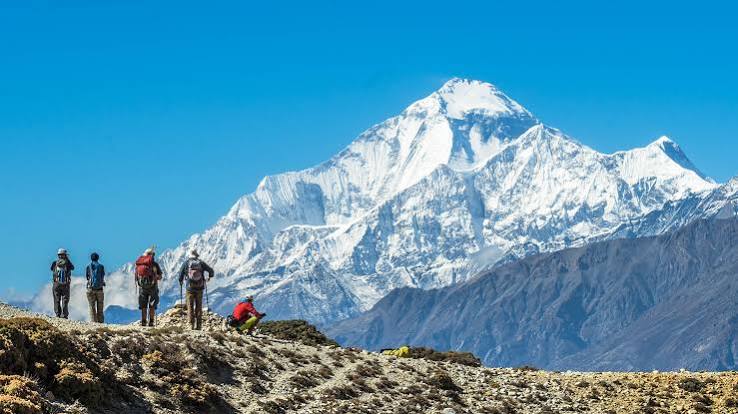
EBC’s scenery is dramatic, high-altitude, and stark — glaciers, snow-capped giants, and rugged alpine terrain, with Everest, Lhotse, and Ama Dablam dominating the skyline for much of the trek. It also runs through Sherpa territory, with monasteries, prayer wheels, and genuine mountaineering culture built into the villages you pass through — Namche Bazaar in particular feels like a proper mountain town rather than just a trail stop.
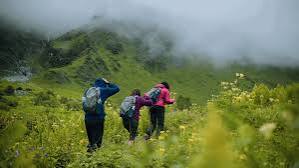
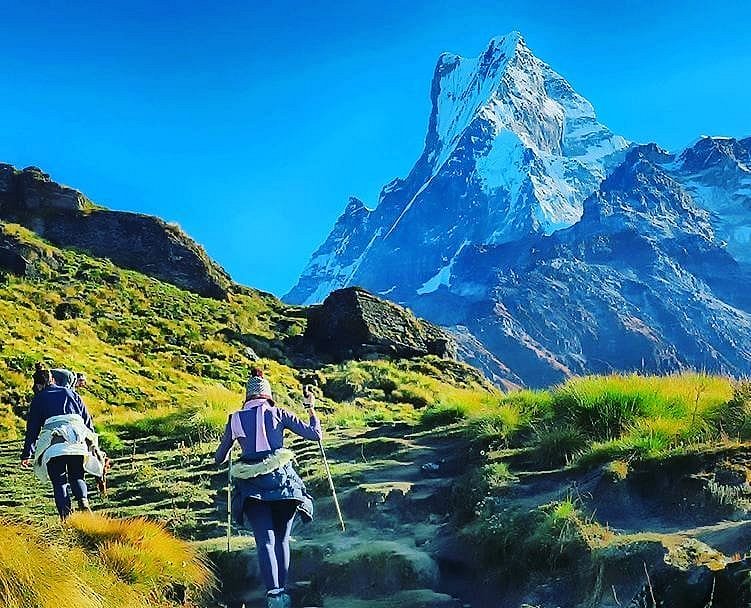
ABC’s scenery changes more as you climb — subtropical forest and terraced farmland at lower elevations, rhododendron forest in spring, opening into the Annapurna Sanctuary itself: a dramatic natural amphitheater ringed by Annapurna I, Machhapuchhre, and Himchuli. Many trekkers find this variety — jungle to alpine in under two weeks — more visually rewarding day to day than EBC’s more uniformly high-altitude landscape. The trek also passes through Gurung villages, with a different cultural flavor than the Sherpa communities on the EBC route.
Neither is objectively more beautiful. EBC gives you scale and prestige. ABC gives you variety and a genuinely spectacular final approach into the Sanctuary.
Crowds
Both treks get busy in peak season (March–May and September–November), but EBC is consistently the more crowded of the two — Namche Bazaar and the final stretch to Gorak Shep can feel like a procession during October. ABC sees plenty of trekkers too, but the shorter duration spreads people out more, and the trail rarely feels as bottlenecked.
Permits and Guide Requirements
Since April 2023, a government-licensed guide is mandatory for foreign trekkers on both routes — this isn’t a point of difference between them anymore. Permit requirements do differ slightly: EBC requires the Sagarmatha National Park permit and a local Khumbu Pasang Lhamu Rural Municipality permit, while ABC requires the Annapurna Conservation Area Permit (ACAP). Both also require a TIMS card, arranged through your trekking agency.
Which One Should You Choose?
Choose Everest Base Camp if: you want the trek with the biggest name attached, you have two full weeks to give it, your budget can absorb the higher cost, and you’re comfortable with real high-altitude conditions and the risk of flight delays.
Choose Annapurna Base Camp if: you’re shorter on time, want to keep costs down, prefer a gentler introduction to high-altitude trekking, or want more landscape variety across a shorter trip.
Can’t decide? Some trekkers do both, on separate trips — ABC first as a lower-risk introduction to Nepal’s trekking terrain, EBC later once they know how their body handles altitude. That’s not a bad strategy if you’re planning to come back to Nepal more than once.
FAQs
1. Which is harder, EBC or ABC?
EBC is generally considered more difficult, due to its higher altitude (5,364 m vs. 4,130 m), longer duration, and steeper, rockier sections of trail.
2. Which is cheaper, Everest Base Camp or Annapurna Base Camp?
ABC is cheaper, typically $800–$1,200 all-in compared to $1,200–$2,000+ for EBC, largely due to the cost of the Lukla flight and pricier high-altitude teahouses on the EBC route.
3. Do I need a guide for EBC or ABC?
Yes, for both. Since April 2023, all foreign trekkers are required to hire a licensed guide through a registered trekking agency for treks in both the Everest and Annapurna regions.
4. Can beginners do Everest Base Camp or Annapurna Base Camp?
Yes, both are achievable by a reasonably fit beginner with proper preparation and pacing. ABC is generally the gentler introduction to high-altitude trekking of the two.
5. Is ABC safer than EBC in terms of altitude sickness?
ABC’s lower maximum altitude (4,130 m vs. 5,364–5,545 m) means a lower — though not zero — risk of altitude sickness. Proper acclimatization matters on both treks.
6. Which trek has better views?
It depends on what you want. EBC gives you Everest, Lhotse, and Ama Dablam and a genuine sense of scale. ABC gives you a 360-degree amphitheater of peaks around the Annapurna Sanctuary and more varied scenery along the way.
Conclusion
There’s no wrong answer between Everest Base Camp and Annapurna Base Camp — just the one that fits your time, budget, and appetite for altitude. Still torn between the two? Get in touch with Nepal Charity Treks and we’ll help you decide based on your dates, fitness, and what you actually want out of the trek.